



































































How to Whitewash Nexus Software
-
Onstipes / 1 week
- December 27, 2025
- 0
- 7 min read

When people search for how to whitewash Nexus software, they are usually not trying to modify code or change how the system fundamentally works. They are reacting to a situation. A deployment review, a client question, an internal audit, or a leadership request that suddenly makes the visibility of tooling feel uncomfortable. The term sounds technical, but the concern behind it usually is not.
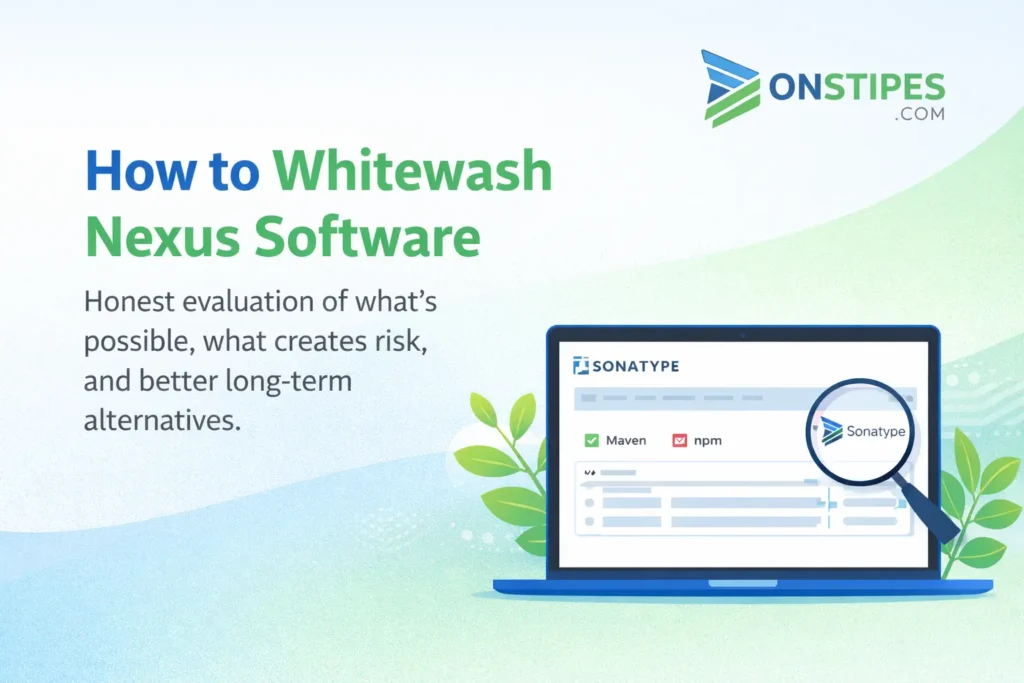
In real-world environments, Nexus is already doing what it was designed to do. Sonatype Nexus Repository Manager sits quietly in the background, managing dependencies, enforcing consistency, and supporting build reliability. Problems start only when expectations around ownership, branding, or perception are unclear. At that point, the tool becomes the focus instead of the process around it.
This article does not treat “whitewashing” as a trick or workaround. It treats it as a signal. A signal that something about visibility, governance, or alignment needs to be evaluated properly. The goal here is not to hide Nexus, but to understand what is actually possible, what is risky, and what works long term without creating technical or compliance debt.
What do people mean when they say “whitewash” Nexus software?
When people use the term “whitewash” for Nexus software, they usually mean making it less visibly “vendor-owned.” This can include hiding branding, reducing obvious identifiers, or making the tool feel like part of an internal platform rather than a third-party product. It is rarely about changing functionality.
This request usually appears after Nexus is already deployed. A client notices it, leadership asks questions, or an audit highlights it. At that point, attention shifts from how the system works to how it looks or appears.
The key point is this: “whitewash” is not a technical term. It reflects discomfort with visibility, not a missing feature in the software.
Is “whitewashing” Nexus software a legitimate or misleading concept?
In real engineering practice, whitewashing Nexus is a misleading concept. Repository managers are not designed to be hidden tools. They are infrastructure components that are expected to be identifiable and traceable.
Trying to make Nexus appear as something else does not change how it behaves. It only changes surface-level presentation, while the underlying patterns remain obvious to experienced engineers and automated systems.
Because of this, whitewashing rarely achieves its intended goal. Instead of reducing scrutiny, it often increases it, especially in security or compliance contexts where clarity is valued.
Understanding how Sonatype Nexus Repository Manager actually works
Sonatype Nexus Repository Manager works by enforcing standards used by package ecosystems such as Maven, npm, Docker, and others. It stores artifacts, manages metadata, verifies integrity, and controls access. These behaviors are not optional or decorative.
Clients interacting with Nexus expect consistent responses, predictable paths, and correct metadata. These expectations come from industry standards, not from Nexus itself. That is why attempts to alter or mask behavior often break builds or cause intermittent failures.
Because Nexus sits in the critical path of software delivery, reliability matters more than appearance. Any change that interferes with expected behavior introduces operational risk.
Common reasons teams look to modify, mask, or rebrand repository software
The most common reason is perception. Some teams believe that exposing third-party infrastructure looks unprofessional. In modern software organizations, this belief is outdated. Using established tools is normal and often expected.
Another driver is compliance anxiety. Teams sometimes assume that if a tool is less visible, it will attract less attention during audits. In reality, audits focus on control, documentation, and governance, not branding.
There is also internal branding pressure. Platform teams want everything to look unified. This is a valid goal, but it is often misunderstood as requiring software disguise instead of proper platform integration.
What is technically possible versus what violates licensing or trust
It is technically acceptable to configure Nexus. You can control repository naming, permissions, authentication, retention rules, and network exposure. You can place it behind standard infrastructure and manage how users access it.
What is not acceptable is altering core behavior, removing identifying elements, suppressing audit data, or misrepresenting the software to users or stakeholders. These actions can violate licensing terms and damage trust.
A simple rule applies: if a change makes the system harder to explain, audit, or upgrade, it is likely crossing the line from configuration into concealment.
Legitimate alternatives: configuration, access control, and clean deployment
Most goals attributed to whitewashing can be achieved through proper configuration. Simplifying repository structure and tightening permissions reduces user confusion without hiding the tool itself.
Access control is especially effective. When users only see what they need, the system feels cleaner and more intentional. This often removes the perceived need to mask anything.
Clean deployment also matters. When Nexus is clearly documented, consistently named, and positioned as part of a platform, it feels purposeful rather than exposed. Transparency, not disguise, creates confidence.
Risks and common mistakes when attempting to obscure software behavior
A common mistake is believing that reverse proxies or renamed services make a system anonymous. They do not. Behavior, responses, and integration patterns still reveal what is running underneath.
Another mistake is ignoring long-term maintenance cost. Custom masking solutions must be retested after every upgrade. Over time, teams avoid upgrades to protect their modifications, creating security and stability risks.
The biggest mistake is assuming that less visibility equals less responsibility. In regulated or security-focused environments, opacity often increases scrutiny rather than reducing it.
Security, compliance, and audit considerations you cannot ignore
From a security perspective, Nexus is valuable because it provides traceability. Teams can see where artifacts came from, who accessed them, and how they were managed. These signals support incident response and vulnerability management.
Auditors look for clarity and control. Clearly identified tools with documented usage are easier to approve than systems that appear intentionally obscured.
Trying to hide infrastructure often raises more questions than it answers. Transparency, combined with good governance, is consistently the safer path.
How to evaluate whether Nexus is the right tool for your use case
If the desire to whitewash Nexus keeps resurfacing, it may indicate a mismatch between tool and expectations. Nexus works best in environments that value standardization, traceability, and governance.
If your organization requires heavy white-labeling, deep UI abstraction, or strict vendor invisibility, Nexus may not align with those priorities. That does not mean it is flawed, only that the requirements differ.
The mistake is forcing a tool to fit a philosophy it was never designed for. Tool selection should follow operating model, not the other way around.
Decision framework: when to adapt your process instead of the software
Before changing the software, evaluate the process around it. Most issues attributed to Nexus are actually process problems, such as unclear ownership, weak documentation, or inconsistent access models.
If the goal is clarity, improve onboarding and documentation. If the goal is control, redesign permissions and repository structure. If the goal is perception, align stakeholders on why transparent infrastructure is a strength.
Only when a tool fundamentally conflicts with how your organization operates should replacement be considered. Adapting process is almost always safer than disguising software.
Conclusion and key takeaways
Whitewashing Nexus software is not a real technical solution. It is usually a signal that expectations, governance, or communication need adjustment. Nexus is designed to be visible, auditable, and predictable, and those traits support long-term stability.
The most effective approach is configuration, transparency, and clear process ownership. Systems that are easy to explain are easier to operate, secure, and defend.
Key takeaways
- Whitewashing reflects perception issues, not software limitations
- Configuration and governance solve most concerns
- Hiding tools increases risk and maintenance cost
- Process alignment is more effective than cosmetic changes