





































































Analysys Mason Telecom Software Taxonomy
-
Onstipes / 3 weeks
- December 21, 2025
- 0
- 8 min read

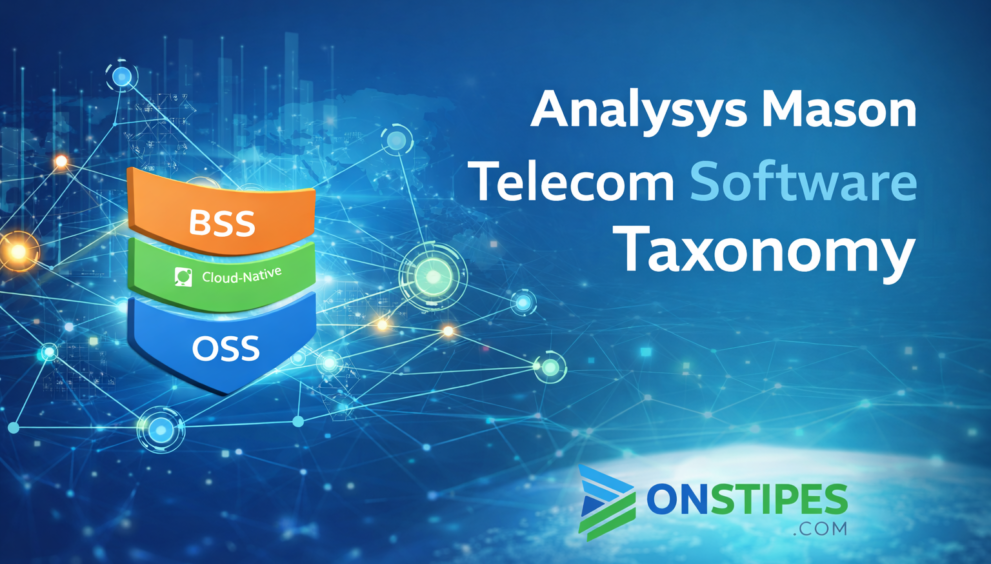
The analysys mason telecom software taxonomy is a structured framework designed to bring clarity to the complex telecom software ecosystem. Created by Analysys Mason, it helps industry stakeholders understand how different software solutions fit across telecom operations and business models.
Telecom environments involve dozens of interconnected systems, from customer billing to network automation. Without a clear classification, comparing vendors or planning investments becomes difficult. This taxonomy organizes telecom software into logical categories, making analysis and decision-making more consistent.
Service providers, vendors, and investors rely on the framework to map products, identify gaps, and benchmark capabilities. It acts as a shared industry language that aligns technical teams with business and strategy leaders.
As networks evolve toward cloud-native, AI-driven, and virtualized architectures, the taxonomy remains especially valuable. It helps organizations navigate digital transformation while keeping software strategy aligned with long-term market trends.
Why Telecom Software Classification Matters for Operators
Telecom operators manage highly complex digital environments that include customer platforms, network systems, and analytics tools. Without clear classification, overlapping software functions can lead to inefficiencies, higher costs, and integration challenges.
A standardized software classification helps operators identify gaps and redundancies across their technology stack. By understanding where each solution fits, decision-makers can prioritize upgrades, retire legacy systems, and avoid unnecessary duplication.
Classification also supports better vendor comparison. When solutions are mapped to common categories, operators can evaluate offerings based on capabilities rather than marketing claims, leading to more informed procurement decisions.
Finally, a clear taxonomy aligns IT and business teams. It creates a shared understanding of how software investments support operational goals, digital transformation, and long-term competitiveness in the telecom market.
Key Objectives Behind the Analysys Mason Taxonomy Model
The primary objective of the Analysys Mason taxonomy model is to bring clarity and structure to the rapidly expanding telecom software landscape. As networks and services grow more complex, the model ensures software solutions are categorized in a consistent and logical way.
Another key goal is to support strategic decision-making. By clearly defining software domains, telecom operators and investors can assess where to allocate budgets, modernize infrastructure, or introduce automation with greater confidence.
The taxonomy also aims to improve market transparency. Vendors can position their products accurately, while analysts can track trends and forecast growth using standardized categories instead of fragmented definitions.
Lastly, the model encourages future-ready planning. It evolves alongside technologies like cloud-native architectures, AI, and virtualization, helping organizations stay aligned with long-term digital transformation goals.
Understanding Business Support Systems (BSS) Categories
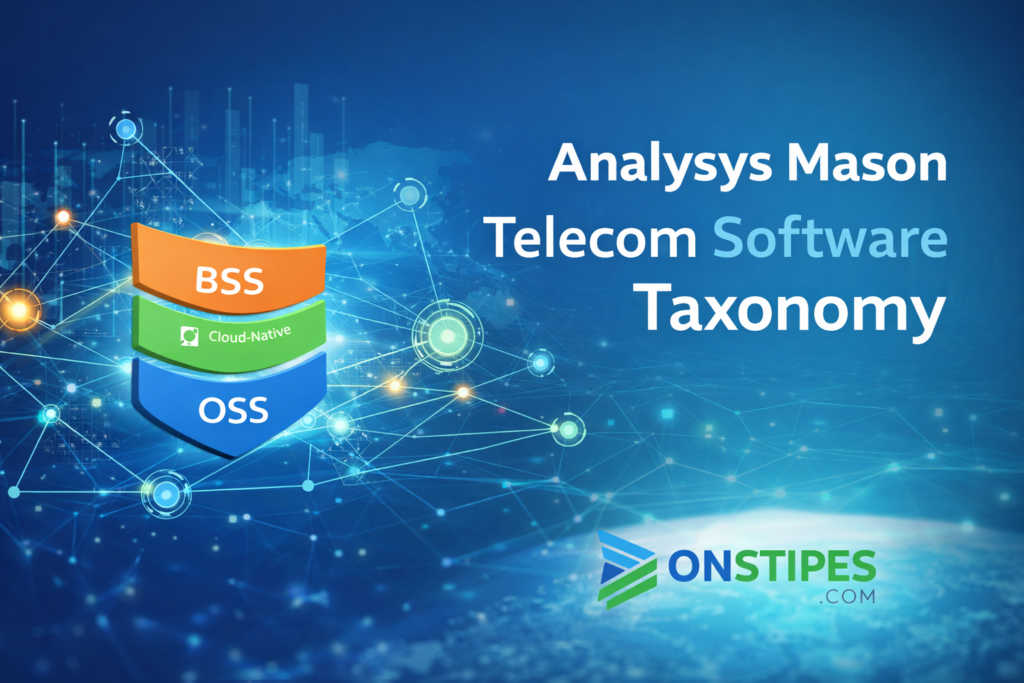
Business Support Systems (BSS) focus on the commercial and customer-facing side of telecom operations. These systems enable operators to manage customers, products, pricing, billing, and revenue in an increasingly digital and competitive market.
Within the taxonomy, BSS categories typically include customer relationship management (CRM), billing and charging, product catalogues, order management, and partner management. Each category represents a critical function that supports customer acquisition, retention, and monetization.
Modern BSS platforms are designed to be cloud-native and API-driven, allowing faster product launches and real-time billing models. This is especially important as operators move toward 5G, IoT, and digital services that require flexible pricing structures.
By clearly defining BSS categories, the taxonomy helps operators evaluate whether their customer systems are scalable, integrated, and aligned with evolving service expectations.
Operations Support Systems (OSS) and Network Management
Operations Support Systems (OSS) are responsible for the technical and operational backbone of telecom networks. These systems help operators design, build, operate, and maintain network infrastructure while ensuring service quality and reliability.
In the taxonomy, OSS categories commonly include network inventory, service provisioning, fault management, performance monitoring, and configuration management. Together, these functions enable end-to-end visibility and control across complex network environments.
As telecom networks evolve toward virtualization and cloud-based architectures, OSS platforms are increasingly focused on automation and real-time assurance. This reduces manual intervention and improves network resilience and efficiency.
Clear OSS classification allows operators to modernize legacy systems, integrate new technologies, and maintain consistent service performance across traditional and next-generation networks.
Cloud-Native and Virtualized Software in Modern Telecom
Cloud-native and virtualized software play a central role in modern telecom transformation. Instead of relying on fixed, hardware-based systems, operators now deploy software that runs on cloud infrastructure and virtual environments, enabling greater flexibility and scalability.
Within the taxonomy, this category covers solutions supporting network functions virtualization (NFV), containerized network functions (CNFs), and software-defined networking (SDN). These technologies allow networks to be deployed, scaled, and updated much faster than traditional models.
Cloud-native software also supports multi-vendor and hybrid-cloud environments, reducing dependency on single suppliers. This gives operators more control over costs, performance, and innovation cycles.
By classifying these solutions clearly, the taxonomy helps organizations plan cloud migration strategies while ensuring operational stability and long-term agility.
Role of Automation, AI, and Analytics in Telecom Software
Automation, artificial intelligence, and analytics are transforming how telecom networks and services are managed. These technologies reduce manual processes and enable faster, more accurate decision-making across both business and operational domains.
In the taxonomy, AI- and analytics-driven software supports functions such as predictive maintenance, network optimization, fraud detection, and customer behavior analysis. Automation tools help orchestrate services end to end, improving speed and reliability.
Advanced analytics allows operators to move from reactive to proactive operations. By identifying issues before they impact customers, service quality improves while operational costs decrease.
Clear classification of automation and AI solutions helps telecom organizations understand where intelligent systems add the most value and how they integrate with existing OSS and BSS platforms.
How Vendors Use Taxonomies for Product Positioning
Telecom software vendors use structured taxonomies to clearly position their products within the market. By aligning solutions with recognized categories, vendors can communicate capabilities in a way that operators and analysts easily understand.
The taxonomy helps vendors highlight core strengths and differentiators. Instead of broad or vague descriptions, products can be mapped to specific functional areas such as billing, orchestration, analytics, or network management.
It also supports competitive benchmarking. Vendors can compare their offerings against rivals within the same category, identify feature gaps, and refine product roadmaps based on market expectations.
Ultimately, taxonomy-based positioning builds credibility. It ensures that marketing, sales, and product teams speak a consistent language that aligns with how telecom buyers evaluate and procure software solutions.
Use Cases for Service Providers and Enterprise Decision-Makers
Service providers use telecom software taxonomies to support strategic planning and digital transformation. By mapping existing systems to standardized categories, they can identify modernization priorities and long-term investment needs.
Enterprise decision-makers rely on the taxonomy for vendor shortlisting and procurement. It simplifies complex comparisons by ensuring solutions are evaluated on functional alignment rather than branding or marketing language.
The framework is also valuable for merger, acquisition, and partnership analysis. Organizations can quickly assess how new technologies fit into their current software ecosystem and where integration efforts may be required.
For both operators and enterprises, these use cases lead to better risk management, clearer roadmaps, and more confident software investment decisions.
Analysys Mason Telecom Software Taxonomy and Market Forecasting
The telecom software taxonomy plays a critical role in market forecasting and industry analysis. By organizing software solutions into standardized categories, analysts can track spending patterns and growth trends with greater accuracy.
Forecasting models rely on clear definitions to estimate demand across areas such as BSS, OSS, cloud-native platforms, and AI-driven automation. The taxonomy ensures that forecasts are consistent, comparable, and data-driven, rather than based on fragmented assumptions.
For operators and investors, these forecasts support long-term planning and risk assessment. Understanding which software segments are growing helps guide capital allocation, innovation strategies, and partnership decisions.
Ultimately, taxonomy-based forecasting provides a clearer view of where the telecom software market is heading, enabling stakeholders to stay ahead in an industry shaped by rapid technological change.
Conclusion
The analysys mason telecom software taxonomy provides a clear and structured way to understand one of the most complex areas of the telecom industry. By organizing software solutions into well-defined categories, it removes ambiguity and supports better strategic thinking.
For telecom operators, the taxonomy improves visibility across OSS, BSS, cloud-native platforms, and intelligent automation tools. This clarity enables smarter investment decisions, smoother modernization efforts, and stronger alignment between technical and business teams.
Vendors and analysts also benefit from a shared industry language. Product positioning, market comparison, and forecasting become more accurate when everyone works from the same classification framework.
As telecom networks continue to evolve with 5G, cloud, and AI, the taxonomy remains a valuable reference point. It helps stakeholders navigate change with confidence while planning for sustainable, future-ready growth.