


























































Corporate Software Inspector
-
Onstipes / 2 weeks
- December 31, 2025
- 0
- 9 min read

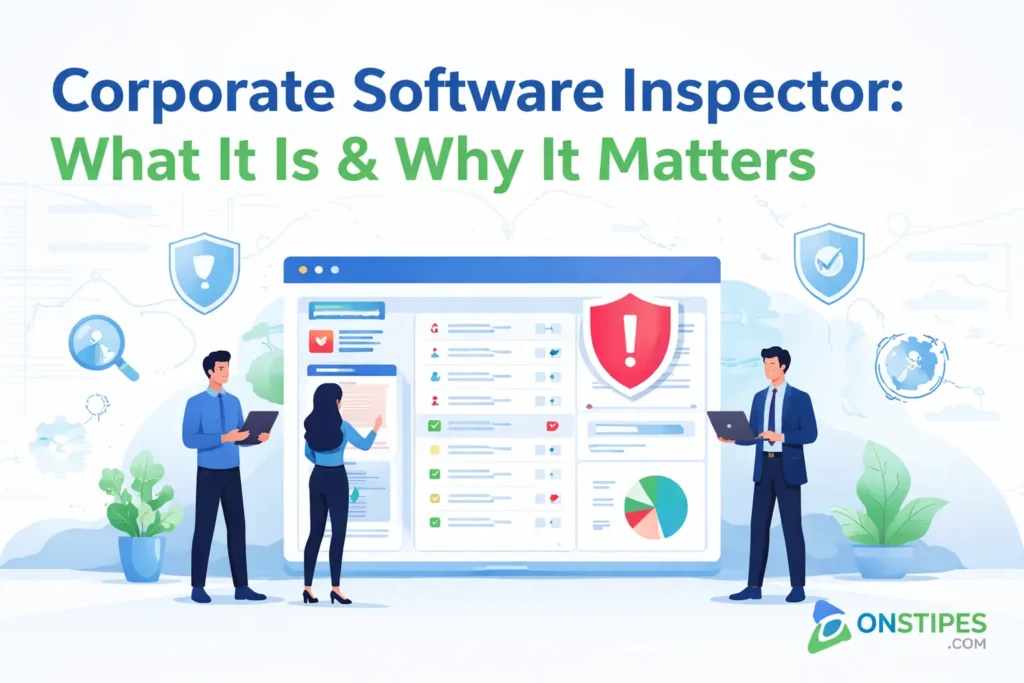
Organizations rarely go looking for a corporate software inspector out of curiosity. They arrive at the topic after facing practical problems such as unpatched applications, unclear software ownership, audit pressure, or limited visibility into what is actually running across the enterprise. At its core, a corporate software inspector refers to a class of enterprise tools designed to identify, assess, and monitor software risk rather than simply track devices or users.
Unlike basic IT monitoring, these tools focus on software-level insight: which applications are installed, whether they are vulnerable, how exposed they are, and where gaps exist between policy and reality. Well-known platforms such as Flexera Corporate Software Inspector helped define this category by addressing third-party software vulnerabilities that traditional operating system updates often miss.
This article explains what a corporate software inspector actually does, the problems it is meant to solve, and how organizations should evaluate whether it fits their governance, security, and compliance needs without marketing hype or oversimplification.
What Is a Corporate Software Inspector and Why Organizations Use It
A corporate software inspector is an enterprise-level tool designed to examine the software environment inside an organization. Its primary role is to identify what applications are installed, assess their security and compliance status, and highlight risks that may not be visible through standard IT monitoring. Organizations use it to gain software-level clarity rather than relying on assumptions based on devices or users alone.
From a practical standpoint, these tools focus on inspection rather than control. They analyze software versions, known vulnerabilities, patch status, and exposure levels across systems. This helps teams understand where risk actually exists, not just where policies say it should not. The value comes from visibility, especially in environments with diverse applications and frequent updates.
Organizations adopt corporate software inspectors when manual tracking or basic tools stop scaling. As software estates grow, relying on spreadsheets, periodic audits, or operating system updates becomes unreliable. A dedicated inspector provides consistent insight, supports audits, and reduces blind spots that can lead to security incidents, compliance failures, or unexpected operational disruptions.
What Problems Corporate Software Inspectors Are Designed to Solve
The primary problem corporate software inspectors address is lack of visibility. Many organizations do not have a reliable, up-to-date view of what software is actually installed across their environment. This creates risk because unknown or unmanaged applications can introduce vulnerabilities, licensing issues, or policy violations without triggering alerts from traditional IT tools.
Another common issue is third-party software exposure. Operating system updates do not cover the full range of business applications used across departments. Corporate software inspectors identify outdated or vulnerable versions of third-party software, helping teams prioritize remediation based on real risk rather than generic patch schedules or vendor advisories alone.
They also solve audit and compliance pressure. When regulators, internal auditors, or security teams ask for evidence, ad hoc data collection becomes time-consuming and error-prone. A software inspector provides consistent, defensible reporting that supports governance requirements and reduces last-minute scrambling during audits or security reviews.
How Corporate Software Inspection Differs from Traditional IT Monitoring
Traditional IT monitoring focuses on infrastructure health such as servers, networks, uptime, and performance metrics. While this is essential, it often stops at the system level. Corporate software inspection goes deeper by examining the applications themselves, including versions, vulnerabilities, and risk exposure. This distinction matters because many security and compliance issues originate from software rather than hardware failures.
Another difference lies in intent. Monitoring tools are designed to alert teams when something breaks or degrades. Software inspectors are designed to reveal what is already risky but still functioning. An application can run perfectly while remaining outdated, unpatched, or non-compliant. Inspection tools surface these silent risks before they turn into incidents.
Corporate software inspection also supports decision-making rather than reaction. Instead of responding to alerts in real time, teams use inspection data to plan remediation, prioritize resources, and justify actions to leadership. This makes it a governance and risk-management capability rather than just an operational one.
Core Capabilities to Expect from a Corporate Software Inspector
At a minimum, a corporate software inspector should provide accurate software discovery across the organization. This means identifying installed applications, versions, and deployment locations without relying on manual input. The goal is to establish a trustworthy baseline of what actually exists, since decisions based on incomplete inventories often lead to missed risks or unnecessary remediation work.
Another essential capability is vulnerability and exposure analysis. Effective tools map installed software against known security issues and highlight where outdated or unsupported versions are in use. This helps teams distinguish between theoretical risk and practical exposure, allowing them to prioritize fixes that materially reduce risk instead of chasing every available update.
Reporting and integration are equally important. A corporate software inspector should produce clear, defensible reports that support audits, security reviews, and executive discussions. Integration with patching, asset management, or ticketing systems ensures findings translate into action rather than static dashboards that look informative but drive little real improvement.
Common Misconceptions About Software Inspection Tools
A common misconception is that corporate software inspectors are simply advanced antivirus or monitoring tools. In reality, they do not focus on detecting active attacks or performance issues. Their value lies in identifying latent risk such as outdated software, unsupported versions, and exposure that exists even when systems appear to function normally.
Another misunderstanding is assuming these tools automatically fix problems. Most corporate software inspectors are diagnostic by design. They surface issues and provide context, but remediation usually depends on connected systems or human decisions. Expecting automatic resolution often leads to disappointment and underuse of the insights provided.
Some organizations also believe software inspection is only necessary for highly regulated industries. In practice, any environment with diverse applications, decentralized installs, or frequent updates benefits from inspection. Risk accumulates quietly regardless of industry when software visibility is incomplete or assumptions replace evidence.
Where Corporate Software Inspectors Fit in Enterprise Governance and Compliance
Corporate software inspectors play a supporting role within enterprise governance frameworks rather than replacing existing controls. They provide evidence about software reality, including what is installed, what is outdated, and where exposure exists. This information grounds governance discussions in verifiable data rather than assumptions or outdated inventories.
From a compliance perspective, these tools help organizations demonstrate due diligence. When auditors ask how software risks are identified and managed, inspection reports offer traceable answers. This is especially useful for internal audits, security assessments, and frameworks that require ongoing monitoring instead of point-in-time reviews.
Corporate software inspectors also sit between strategy and operations. They translate high-level governance requirements into actionable insight for IT and security teams. Without this bridge, compliance efforts often become checkbox exercises that miss real software risk while still consuming significant time and resources.
How to Evaluate Whether Your Organization Actually Needs One
The first indicator is visibility gaps. If your organization cannot confidently answer which applications are installed, where they are deployed, or how current they are, a corporate software inspector likely adds value. Reliance on manual inventories, periodic scans, or assumptions based on standard images usually signals growing risk rather than control.
Another factor is operational strain during audits or incidents. If security reviews, compliance checks, or breach investigations trigger last-minute data collection across teams, inspection tooling can reduce friction. The need is driven by software diversity, decentralization, and change frequency rather than company size alone.
Decision quality is also critical. When patching, risk acceptance, or remediation choices are made without software-specific evidence, resources are often misallocated. A corporate software inspector becomes relevant when leadership needs defensible data to prioritize risk realistically rather than attempting to fix everything at once.
Key Evaluation Criteria Buyers Should Use Before Selecting a Tool
Accuracy should be the first evaluation criterion. A corporate software inspector is only as useful as the quality of its detection and assessment data. Buyers should examine how the tool identifies software, handles versioning, and updates vulnerability intelligence. Inconsistent or outdated data undermines trust and drives teams back to manual validation.
Scalability and integration matter just as much. The tool should function reliably across different operating systems, environments, and organizational units. Integration with existing patch management, asset management, or ticketing systems determines whether insights translate into action or remain isolated reports.
Usability and reporting clarity are equally important. Decision-makers need findings presented in a way that supports prioritization rather than raw technical noise. Clear risk context, defensible reporting, and configurable views are essential. Tools that overwhelm users with unfiltered data tend to be ignored over time.
Also Read: Economic Consequences of Translation Errors in Business Negotiations
Implementation Challenges and Operational Considerations
Implementing a corporate software inspector often surfaces organizational rather than technical challenges. Deployment requires coordination across IT, security, and business units to ensure coverage is complete and trusted. Without clear ownership, inspection results may be questioned or ignored, especially when findings challenge long-held assumptions.
Data interpretation is another consideration. These tools generate insight, not decisions. Teams must agree on how risk is defined, which findings require action, and what can be temporarily accepted. Without governance around interpretation, inspection data may create noise or unnecessary remediation effort.
Operational success depends on process alignment. Inspection findings should feed existing workflows such as patching cycles or risk reviews. When treated as a standalone activity, the tool’s value diminishes. Integration into daily operations ensures insights lead to consistent, measurable improvement over time.
Making an Informed Decision: When a Corporate Software Inspector Adds Real Value
A corporate software inspector adds real value when it closes the gap between assumed control and actual visibility. Organizations benefit most when software risk is already affecting audits, security posture, or operational confidence. Evidence-based insight allows leaders to justify remediation priorities with data rather than intuition.
Value is highest when the tool supports existing governance and security processes instead of being expected to fix problems on its own. Organizations that treat inspection as a decision-support capability tend to see better adoption and clearer outcomes.
Ultimately, the decision should be driven by risk complexity rather than trend adoption. When software diversity, decentralization, and compliance demands outgrow manual oversight, a corporate software inspector becomes a practical and defensible investment rather than an optional layer.