



























































Best Ai Avatar Services for Virtual Product Launches
-
Onstipes / 2 weeks
- December 30, 2025
- 0
- 11 min read

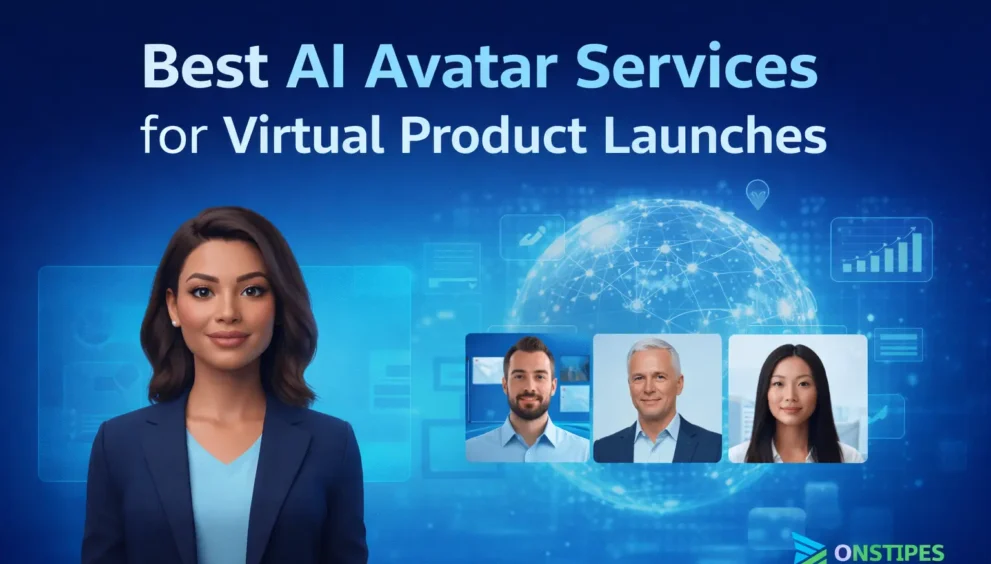
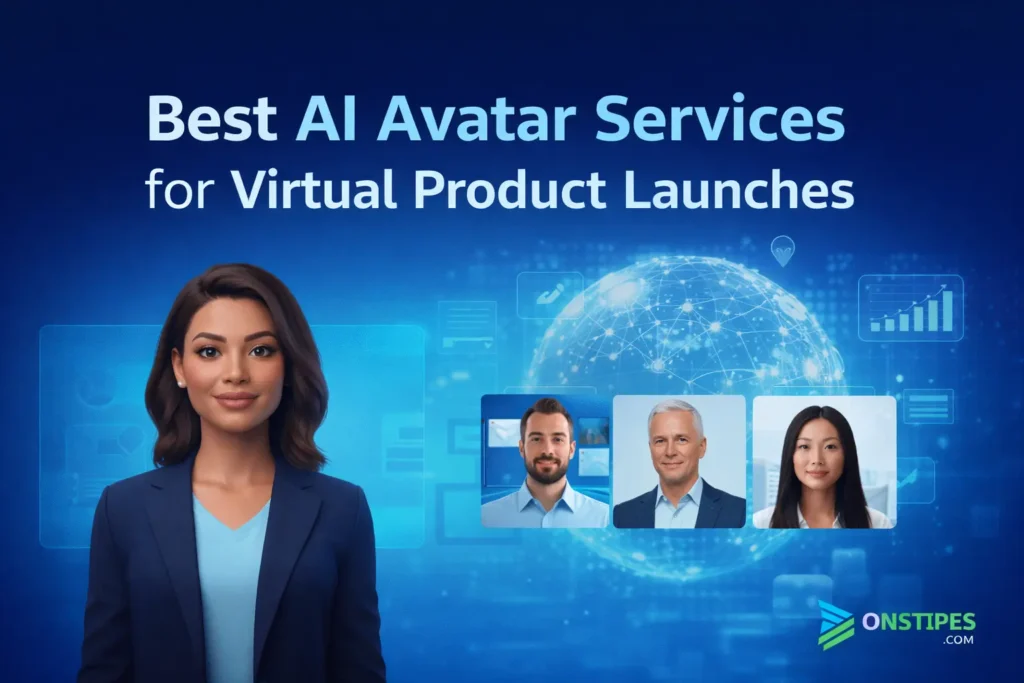
Best AI Avatar Services for Virtual Product Launches is no longer just a trend-driven phrase. It reflects a real shift in how modern product launches are planned and delivered. As announcements move online, teams face increasing pressure to communicate clearly across regions, platforms, and time zones without depending entirely on live presenters or complex production setups.
AI avatar services help solve this by separating the message from traditional filming constraints. Instead of coordinating speakers, studios, and repeated recordings, teams can focus on refining what needs to be said. This approach is particularly relevant for virtual product launches, where accuracy, consistency, and repeatability matter more than presentation performance.
For AI and technology buyers, the real question is not whether these tools look impressive, but whether they are dependable enough for high-stakes launch moments. Poor execution can weaken trust, while thoughtful use can reduce operational friction and improve message control at scale.
This article examines the best AI avatar services for virtual product launches from a practical, evaluation-focused perspective. It explains how these tools are used in real launch environments, what criteria buyers should apply when choosing a platform, and how AI avatars can be integrated without compromising brand credibility or long-term strategy.
What Problem AI Avatars Solve in Virtual Product Launches
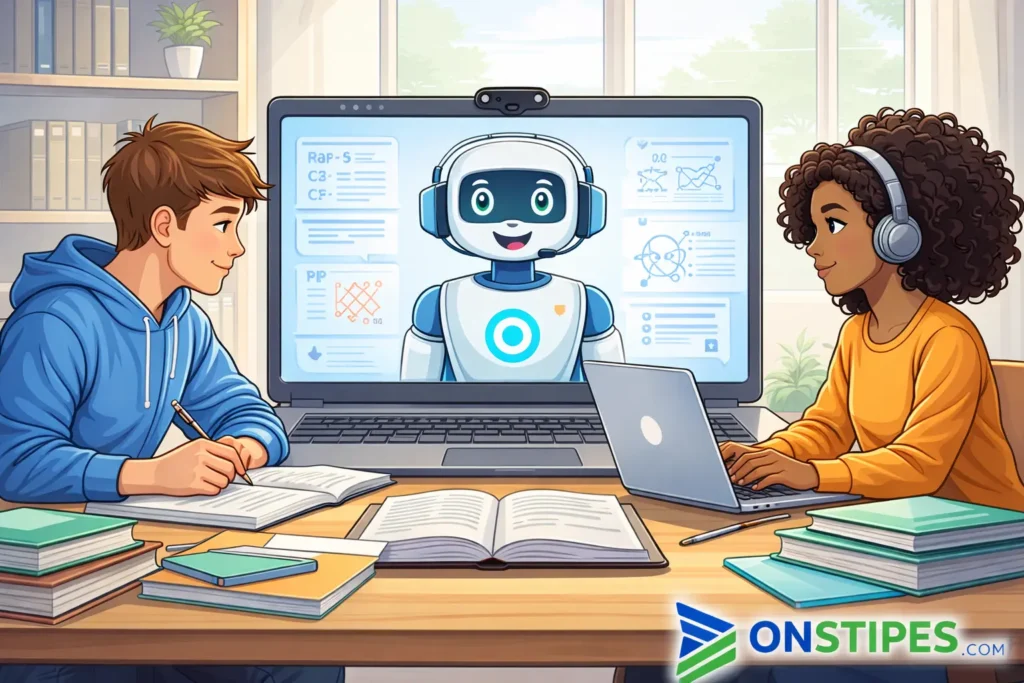
Virtual product launches often struggle with consistency, scale, and production overhead. Teams need a clear, controlled way to present complex products without relying on live presenters, repeated recordings, or time-zone coordination. AI avatars address this by acting as a reusable digital presenter that delivers scripted messages reliably across formats and regions.
Another core problem is speed. Launch timelines are tight, and last-minute changes are common. Traditional video production makes updates expensive and slow. AI avatars allow teams to revise scripts, languages, or messaging without reshooting footage, which significantly reduces friction when product details or positioning shift close to launch.
Audience reach is also a challenge. Global launches require localized delivery, yet hiring presenters for every language rarely scales. AI avatar services support multilingual output while maintaining the same visual identity and tone, helping brands avoid fragmented messaging across markets.
Finally, AI avatars reduce dependency on individuals. When launches rely on a single spokesperson, availability and performance risk increase. Avatars provide continuity, allowing marketing and product teams to focus on strategy, distribution, and engagement rather than presenter logistics.
How AI Avatars Are Used Across Modern Launch Formats
AI avatars are most commonly used as structured presenters in pre-recorded launch videos. These videos introduce products, explain features, and guide viewers through key value points without requiring a live host. This format works well for controlled messaging, investor briefings, and on-demand launch pages where clarity matters more than real-time interaction.
In live or hybrid launch events, AI avatars are often used for specific segments rather than the entire presentation. They may open the event, introduce speakers, or deliver scripted demos while human presenters handle Q&A. This hybrid use reduces pressure on live speakers while keeping the experience dynamic and credible.
AI avatars are also deployed across post-launch assets. Teams reuse the same avatar to create short clips for social media, onboarding videos, or localized announcements. This continuity helps maintain a consistent launch narrative across channels without rebuilding content from scratch.
Some organizations use AI avatars internally before public launch. Product teams create internal walkthroughs or sales enablement videos to align stakeholders. This use case is often overlooked, but it improves launch readiness by ensuring everyone receives the same information in the same format.
Pre-Recorded vs Real-Time AI Avatars: Which Fits Your Launch Goals
Pre-recorded AI avatars are the most reliable option for product launches that prioritize message control. They allow teams to script, review, and approve every word before release. This is especially important for regulated industries, technical products, or launches tied to legal disclosures, where accuracy matters more than spontaneity.
Real-time AI avatars, by contrast, are designed for interaction. They can respond to prompts, guide live demos, or simulate conversation. While this can increase engagement, it also introduces risk. Real-time systems depend on stable inputs, strong moderation, and predictable environments, which are not always guaranteed during live launch events.
For most launch teams, pre-recorded avatars handle the core narrative, while humans manage live elements such as Q&A or discussion. This balance keeps the launch polished without sacrificing flexibility. Using real-time avatars exclusively often shifts focus away from the product and toward the technology itself.
The right choice depends on intent. If the goal is clarity and scale, pre-recorded avatars usually win. If controlled interaction adds measurable value, real-time avatars can support specific segments rather than the entire launch experience.
What Makes an AI Avatar Suitable for Product Launch Use
A suitable AI avatar for a product launch must communicate information clearly and predictably. The first requirement is intelligibility: natural-sounding speech, accurate pronunciation of product terms, and steady pacing. Launch audiences are often encountering a product for the first time, so any audio distortion, awkward timing, or visual distraction undermines comprehension and credibility.
Control over messaging is equally important. Product launches involve multiple review cycles across marketing, legal, and product teams. An effective AI avatar system allows precise script editing, quick revisions, and consistent delivery without re-recording. Tools that limit emphasis control or force rigid templates often become bottlenecks when last-minute changes are unavoidable.
Brand alignment is another deciding factor. The avatar’s appearance, tone, and body language should fit the product’s positioning and audience expectations. An enterprise SaaS launch requires a different delivery style than a consumer-facing app. The best solutions allow subtle customization while keeping setup simple, avoiding overdesigned avatars that draw attention away from the product itself.
Finally, reliability determines suitability more than novelty. Launches are not experimentation spaces. A dependable AI avatar renders consistently, exports cleanly across platforms, and performs the same way every time. Stability, predictable output, and low error rates matter far more than advanced features that introduce risk at publish time.
Key Evaluation Criteria Buyers Should Use Before Choosing a Tool
The first criterion buyers should assess is message control. A suitable tool must allow precise script editing, easy revisions, and consistent delivery across versions. Product launch messaging often changes late in the process, so platforms that require re-recording or complex regeneration workflows create friction and delay rather than efficiency.
Output quality and reliability come next. Buyers should evaluate speech clarity, visual stability, and export consistency across formats. An AI avatar that looks acceptable in a preview but degrades during final rendering introduces unnecessary risk. Testing short samples under real launch conditions is more useful than relying on demo videos.
Ease of integration is another practical factor. Launch content rarely lives in one place. The tool should fit into existing workflows for landing pages, video platforms, CRM tools, or event software. If exporting, hosting, or updating content requires manual workarounds, adoption costs rise quickly.
Finally, buyers should consider governance and support. Clear usage rights, data handling policies, and responsive support matter during launches, when timelines are tight and errors are costly. Tools that lack transparency or documentation often create long-term operational issues beyond the launch itself.
Also Read: Social Security Administration Website Glitch Caused Panic Among Ssi Recipients
Overview of Leading AI Avatar Platforms for Product Launches
Several AI avatar platforms are commonly evaluated for product launch use, each serving slightly different needs. Synthesia is often chosen for structured, pre-recorded launch videos where message control and consistency matter most. It is widely used for corporate announcements, product explainers, and multilingual launch assets that need predictable output.
HeyGen appeals to teams that want faster turnaround and more visual flexibility. It is frequently used for marketing-led launches, short-form product intros, and regional variants where speed and ease of use are priorities. Buyers typically evaluate it for scalability rather than deep customization.
For interactive or experimental formats, platforms like D-ID and RAVATAR are explored. These tools support more dynamic avatar behavior but often require tighter controls and testing due to higher complexity.
The key takeaway is that no platform is universally “best.” The right choice depends on launch format, risk tolerance, review requirements, and how much control teams need over messaging and presentation.
Brand Trust, Accuracy, and Risk Considerations
Brand trust is one of the most overlooked factors when teams adopt AI avatars for launches. Viewers implicitly judge credibility based on delivery quality. If an avatar mispronounces product terms, uses unnatural emphasis, or appears visually inconsistent, audiences may question the seriousness of the product itself rather than the technology presenting it.
Accuracy is equally critical. AI avatars deliver exactly what they are scripted, which means errors in copy, outdated claims, or ambiguous phrasing scale instantly. Unlike live presenters, avatars cannot self-correct. Teams must treat scripts as final product documentation, not marketing drafts, and run the same validation checks they would apply to public-facing specs.
Disclosure and expectations also matter. When audiences are surprised to discover an AI presenter, trust can erode. Clear, subtle disclosure avoids backlash and aligns with emerging transparency norms. The goal is clarity, not deception, especially in enterprise or regulated markets.
Finally, risk increases when avatars are overused. Replacing all human presence can make launches feel impersonal. AI avatars work best as structured communicators, not substitutes for genuine interaction or accountability.
Budget, Scalability, and ROI Expectations
Budget evaluation should start with total cost of use, not just subscription pricing. AI avatar tools often charge based on video length, resolution, languages, or usage volume. Buyers should factor in revision cycles, localization needs, and long-term reuse of launch assets, as these can significantly affect real costs over time.
Scalability is where AI avatars typically justify their investment. Creating one core launch script and deploying it across regions, formats, and timelines delivers value that traditional production struggles to match. The ability to update messaging without reshooting reduces both direct spend and internal coordination overhead as products evolve.
ROI should be measured against specific outcomes, not novelty. Metrics such as time saved, speed to launch, content reuse rate, and consistency across markets provide clearer signals than engagement alone. AI avatars rarely replace entire launch teams, but they can remove repeated production work that adds little strategic value.
Finally, teams should avoid assuming immediate returns. The strongest ROI often appears after the first launch, when avatars become part of a repeatable content system rather than a one-time experiment.
Common Mistakes Teams Make When Using AI Avatars
One common mistake is treating AI avatars as a shortcut rather than a communication tool. Teams sometimes rush scripts, assuming the technology will compensate for weak messaging. In reality, avatars amplify whatever they are given. Poor structure, vague claims, or unclear positioning become more obvious when delivered in a controlled, repeatable format.
Another frequent issue is overemphasizing realism at the expense of clarity. Highly stylized or overly human-like avatars can distract viewers, especially in technical launches. When audiences focus on how the avatar looks instead of what is being explained, the product message loses impact. Practical delivery usually performs better than visual novelty.
Teams also underestimate review and governance needs. Because avatars can be updated quickly, some organizations skip formal approval steps. This increases the risk of publishing outdated specs, noncompliant claims, or inconsistent messaging across regions. Speed should not replace validation.
Finally, many teams overuse avatars. Removing all human presence can make launches feel impersonal. AI avatars work best when they support structure and scale, not when they replace authentic interaction entirely.
Future-Proofing Your Launch Content Strategy with AI Avatars
Future-proofing starts with designing launch content as a system, not a one-time asset. AI avatars enable this shift by separating messaging from production. When scripts, visuals, and languages can be updated independently, teams avoid rebuilding launch materials every time a product changes. This modular approach keeps content usable across multiple releases, markets, and channels without repeating core production work.
Another long-term advantage is consistency over time. As teams grow or roles change, AI avatars preserve a stable delivery style and product narrative. This reduces reliance on individual presenters and protects launch quality from internal turnover. When used responsibly, avatars act as a durable communication layer that supports evolving products without resetting brand tone or structure.
Future-proofing also requires restraint. The most resilient strategies treat AI avatars as infrastructure, not a differentiator. By focusing on clarity, governance, and repeatability rather than novelty, teams ensure the technology remains useful even as tools improve. AI avatars that serve clear communication goals today are far more likely to remain valuable as platforms, formats, and audience expectations continue to evolve