




































































Standard Assessment Procedure Software 2026
-
Onstipes / 1 week
- December 26, 2025
- 0
- 13 min read

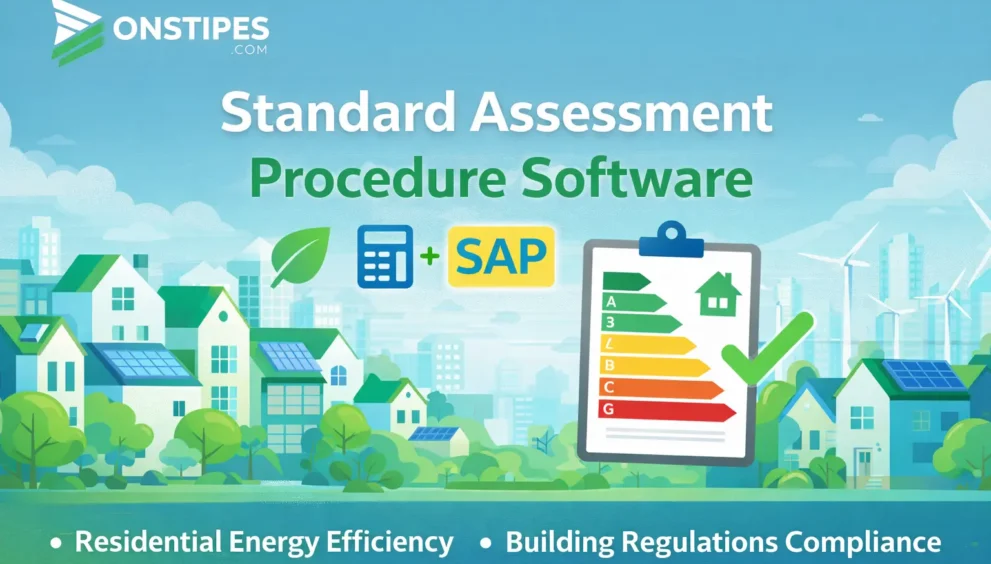
Standard assessment procedure software is a specialized digital tool used to measure the energy efficiency of residential buildings using a fixed, government-approved methodology. It is mainly applied in the United Kingdom and follows standardized rules so that all homes are assessed fairly and consistently, regardless of location or assessor.
This software analyzes how a dwelling uses energy for heating, hot water, lighting, and ventilation. Instead of relying on real household behavior, it uses standard assumptions about occupancy and usage. This approach ensures that results are comparable across different properties and are not influenced by lifestyle choices.
The primary purpose of standard assessment procedure software is to generate reliable energy performance data. This data is essential for producing Energy Performance Certificates, meeting building regulation requirements, and evaluating carbon emissions for new or renovated homes. The software converts technical building details into a clear energy rating scale that professionals and authorities can understand.
Overall, standard assessment procedure software plays a key role in improving building energy standards. It supports energy-efficient design, helps reduce environmental impact, and ensures compliance with national housing regulations through accurate and uniform assessment methods.
Purpose and Core Function of Standard Assessment Procedure Software
Why Standard Assessment Procedure Software Exists
Standard assessment procedure software exists to provide a uniform and regulated way to measure the energy efficiency of residential buildings. Without a standardized system, energy ratings would vary depending on who performs the assessment. This software ensures that every property is evaluated using the same technical rules and assumptions, making results consistent and reliable across the housing sector.
The methodology behind the software is set by the UK government, which means results are legally recognized for regulatory and certification purposes. This makes the software essential for compliance rather than optional analysis.
Primary Objectives of the Software
The main objective of standard assessment procedure software is to calculate how much energy a home is expected to use under standard living conditions. It focuses on the performance of the building itself rather than occupant behavior.
Key objectives include:
- Producing an official energy efficiency score
- Estimating annual energy consumption
- Calculating carbon dioxide emissions
- Supporting energy performance certification
These outputs help regulators, developers, and homeowners understand a building’s energy impact.
How the Software Interprets Building Data
The software processes detailed building information such as construction materials, insulation levels, window types, and heating systems. Each input is assessed using predefined formulas rather than real-time monitoring.
By using fixed assumptions, the software avoids variations caused by lifestyle differences. This ensures the assessment reflects structural efficiency, not personal energy habits.
Role in Housing Standards and Compliance
Standard assessment procedure software is a core requirement for meeting UK building regulations for new residential properties. Local authorities rely on its outputs to approve construction projects and verify compliance.
Beyond regulation, the software also supports national energy-efficiency goals by guiding better building design and encouraging low-carbon construction practices.
How Standard Assessment Procedure Software Works in Practice
Data Collection and Property Details
Standard assessment procedure software begins with the collection of technical property data. This includes floor area, building shape, construction materials, insulation thickness, window glazing, ventilation methods, and heating systems. The data is factual and measurable, not estimated from usage patterns.
All inputs must follow official measurement rules. This ensures the assessment is based on verifiable building characteristics, not assumptions or personal preferences.
Use of Standardized Assumptions
Once the building data is entered, the software applies standard occupancy and usage assumptions. These assumptions represent an average household and remain the same for every property.
This step is critical because it removes variability caused by lifestyle differences. A home occupied by one person and the same home occupied by five people will receive the same SAP result, as the focus is the building’s efficiency, not behavior.
Energy Calculation Process
The software calculates energy demand for:
- Space heating
- Water heating
- Lighting
- Ventilation and heat loss
It then evaluates how efficiently installed systems meet that demand. Heating fuel type, system efficiency, and renewable technologies are all factored into the final calculations.
Generation of Final Results
After processing, the software produces a numerical SAP score, estimated carbon emissions, and projected energy costs. These results are used to determine compliance with regulations and to generate official documentation such as energy performance ratings.
Understanding SAP Scores and Energy Ratings
What the SAP Score Represents
The SAP score is a numerical indicator of a home’s energy efficiency. It is calculated on a scale that typically ranges from 1 to 100+, where a higher number indicates better energy performance. A higher score means the building requires less energy for heating, hot water, and lighting under standard conditions.
This score is not a prediction of actual energy bills. Instead, it reflects how efficiently the building is designed and constructed when assessed under fixed assumptions.
How SAP Scores Are Calculated
The software calculates the SAP score by comparing:
- Energy demand of the building
- Efficiency of installed systems
- Type and cost of fuel used
- Carbon emissions produced
Lower energy demand and lower emissions result in a higher score. Renewable energy systems, such as solar panels or heat pumps, can improve the score because they reduce reliance on high-carbon fuels.
SAP Score vs EPC Rating
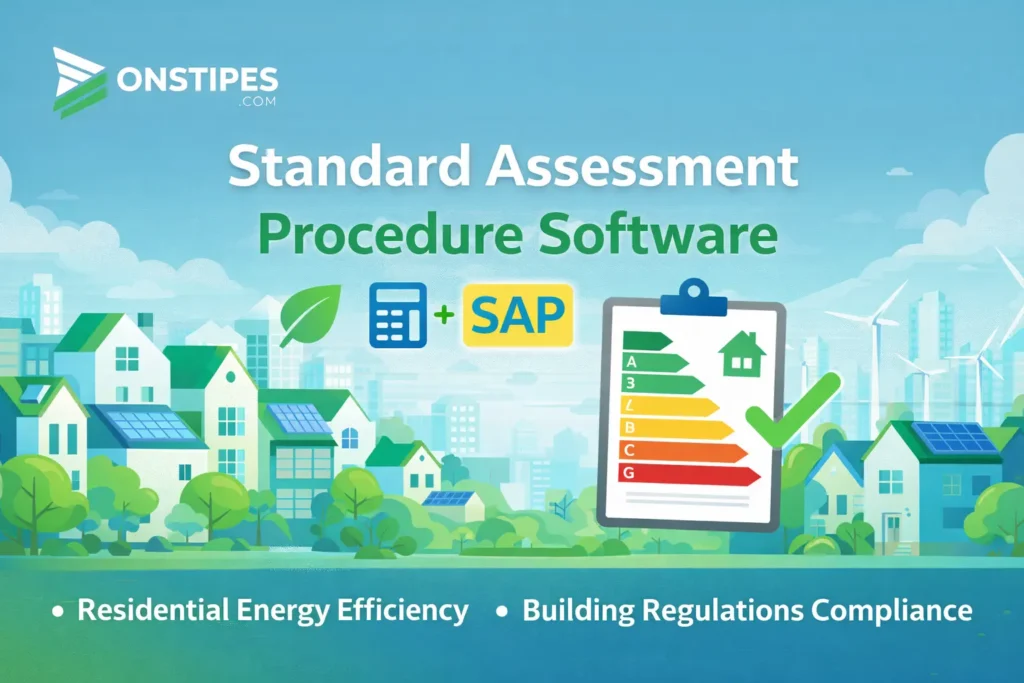
The SAP score is converted into an Energy Performance Certificate (EPC) rating, which is displayed as a letter grade from A to G.
- A–B: Very energy efficient
- C–D: Average efficiency
- E–G: Low efficiency
While the EPC letter is more visible to the public, the SAP score is the technical foundation behind it.
Why SAP Ratings Matter
SAP ratings affect:
- Building regulation approval
- Property value and marketability
- Environmental impact assessments
- Long-term housing policy decisions
They provide a consistent way to judge housing energy performance across the UK.
Difference Between SAP and RdSAP Software
What Is RdSAP and Why It Exists
RdSAP stands for Reduced Data Standard Assessment Procedure. It was created to assess existing residential properties, especially those built before modern building regulations were introduced. Full SAP requires detailed construction data that is often unavailable for older homes, which is why RdSAP uses a simplified data model.
RdSAP software allows assessors to evaluate energy performance without invasive inspections or original construction plans.
Key Differences in Data Requirements
SAP software requires full construction specifications, including exact insulation values, material layers, and system efficiencies. This level of detail is typically available only for new-build homes or major renovations.
RdSAP, on the other hand, relies on:
- Visual inspection
- Age-based assumptions
- Default values where details are unknown
This makes RdSAP practical but less precise than full SAP.
When SAP Is Mandatory
Standard assessment procedure software (SAP) is mandatory when:
- A new dwelling is constructed
- A building undergoes major structural changes
- Compliance with current building regulations is required
In these cases, RdSAP cannot be used as a substitute.
When RdSAP Is Used Instead
RdSAP is used primarily for:
- Existing homes
- Rental property EPCs
- Property sales assessments
While it produces an EPC rating, it does not meet regulatory requirements for new construction.
Who Can Use Standard Assessment Procedure Software
Requirement for Trained and Accredited Users
Standard assessment procedure software is not open-use software for the general public. It can only be used by individuals who are professionally trained and accredited under approved UK schemes. This restriction exists because SAP calculations must follow strict technical and legal standards.
Accreditation ensures that results are accurate, consistent, and acceptable for regulatory purposes. Incorrect SAP assessments can lead to non-compliance with building regulations.
Role of Energy Assessors
Certified energy assessors are the primary users of SAP software. Their role is to:
- Collect verified building data
- Enter information correctly into the software
- Interpret outputs accurately
- Produce compliant energy reports
Assessors are responsible for the integrity of the assessment and can be held accountable for errors.
Use by Developers and Design Teams
Property developers, architects, and design consultants may interact with SAP software during the planning and design stage. In many cases, they work alongside accredited assessors to test design options and improve energy efficiency before construction begins.
However, final regulatory submissions must still be completed or approved by a qualified assessor.
Oversight and Compliance Control
Government-approved accreditation bodies monitor how SAP software is used. These bodies:
- Audit assessments
- Enforce quality standards
- Maintain assessor registers
This oversight ensures that SAP results remain reliable across the housing sector and are trusted by regulators and local authorities.
Role of Standard Assessment Procedure Software in Building Design
Use During the Design Stage
Standard assessment procedure software is often used before construction begins to evaluate how design choices affect energy performance. At this stage, it helps design teams understand the impact of insulation levels, building orientation, window types, and heating systems.
By testing different design options, developers can identify energy-efficient solutions early, reducing costly changes later in the construction process.
Supporting Compliance With Building Regulations
Building regulations in the UK require new homes to meet specific energy efficiency standards. SAP software provides the formal evidence that a proposed design complies with these rules.
Local authorities rely on SAP calculations to confirm that a building meets minimum energy and carbon emission targets before granting approval.
Influence on Material and System Selection
SAP results can influence decisions such as:
- Choice of insulation materials
- Type of heating system installed
- Use of renewable energy technologies
- Ventilation strategies
Design teams may adjust these elements to achieve a higher SAP score and better regulatory outcomes.
Encouraging Energy-Efficient Construction
By quantifying energy performance, SAP software promotes more efficient building practices. It encourages builders to adopt designs that reduce long-term energy use and carbon emissions, contributing to broader environmental and sustainability goals.
Role of Standard Assessment Procedure Software in Energy Policy
Supporting National Energy Efficiency Goals
Standard assessment procedure software plays a direct role in supporting national energy efficiency targets. By providing a consistent way to measure building performance, it allows governments and regulators to track improvements across the housing sector over time.
Because every assessment follows the same methodology, policymakers can rely on SAP data to evaluate whether regulations are effective and where further improvements are needed.
Contribution to Carbon Reduction Targets
SAP software calculates carbon dioxide emissions associated with residential energy use. These calculations help authorities understand how housing contributes to overall emissions and how design changes can reduce environmental impact.
Lower-emission heating systems and renewable energy technologies are reflected positively in SAP results, encouraging wider adoption of low-carbon solutions.
Use in Regulatory Updates and Planning
Historical SAP data is often used when updating building regulations. Trends identified through assessments help shape future standards, ensuring that new homes become progressively more energy efficient.
This makes SAP software not just an assessment tool, but also a foundation for long-term energy planning.
Ensuring Fair and Comparable Assessments
By using fixed assumptions, SAP software ensures fairness. Homes are judged on construction quality and system efficiency rather than how occupants behave, making policy decisions more balanced and data-driven.
Limitations and Common Misunderstandings of SAP Software
SAP Scores Do Not Predict Actual Energy Bills
One common misunderstanding is that SAP results represent real household energy costs. In reality, SAP software uses standardized assumptions, not real usage patterns. Actual bills can vary depending on occupancy, lifestyle, and heating habits.
SAP measures building efficiency, not personal energy behavior.
Fixed Assumptions Can Reduce Accuracy for Individuals
Because SAP uses average assumptions, it may not reflect the experience of every household. For example, a home with low occupancy might use less energy than SAP estimates, while high-usage households may exceed predictions.
This limitation is intentional, as the goal is consistency, not personalization.
SAP Is Not a Real-Time Monitoring Tool
SAP software does not track live energy consumption or smart meter data. It is a calculation-based model, not a monitoring system. Its purpose is compliance and comparison, not daily energy management.
Design Trade-Offs Can Affect Results
Some buildings may achieve high SAP scores through system efficiency rather than insulation quality. While still compliant, this can sometimes lead to trade-offs in comfort or long-term resilience if not carefully designed.
Understanding these limitations helps professionals use SAP results responsibly.
Future Developments in Standard Assessment Procedure Software
Periodic Updates to the SAP Methodology
Standard assessment procedure software is not static. The underlying SAP methodology is reviewed and updated periodically to reflect changes in construction practices, heating technologies, and environmental priorities. These updates ensure that assessments remain relevant as building standards evolve.
When updates occur, software providers must align their tools with the latest approved methodology to remain valid for regulatory use.
Adapting to Low-Carbon Technologies
As low-carbon heating systems such as heat pumps, solar thermal systems, and improved ventilation technologies become more common, SAP software continues to expand how these systems are modeled. Newer versions better represent modern energy systems and their impact on emissions.
This allows SAP assessments to more accurately reflect the performance of future-ready homes.
Alignment With Net-Zero Housing Targets
Government climate commitments increasingly influence how SAP software evolves. Future updates are expected to place greater emphasis on carbon intensity, fabric efficiency, and long-term sustainability rather than short-term energy cost alone.
This shift supports broader goals of reducing residential emissions and encouraging climate-resilient housing design.
Digital Integration and Workflow Improvements
Modern SAP software is also improving in usability. Better data integration, reduced duplication of inputs, and clearer reporting formats help assessors and design teams work more efficiently while maintaining accuracy and compliance.
Conclusion
Standard assessment procedure software plays a vital role in how residential energy efficiency is measured, regulated, and improved. By using a consistent, government-approved methodology, it ensures that homes are assessed fairly based on their construction quality and installed systems rather than individual living habits. This standardization allows results to be trusted by regulators, professionals, and policymakers alike.
Throughout the housing lifecycle, from early design and planning to final regulatory approval, this software supports informed decision making. It helps architects and developers identify energy efficient solutions, enables authorities to enforce building regulations, and provides a technical foundation for energy performance certification. Its structured approach ensures that energy efficiency targets are met in a transparent and measurable way.
Although standard assessment procedure software has limitations, such as reliance on fixed assumptions and the absence of real-time data, these characteristics are intentional. They preserve consistency and comparability across the housing sector, which is essential for regulation and policy development.
As building standards continue to evolve toward lower carbon emissions and higher efficiency, standard assessment procedure software will remain a central tool. Its ongoing updates and alignment with future housing goals ensure that it continues to support sustainable, energy-efficient residential development in a reliable and authoritative manner.