

































































County Integrated Development Plan: Purpose, Process, and Importance
-
Onstipes / 3 weeks
- December 20, 2025
- 0
- 8 min read

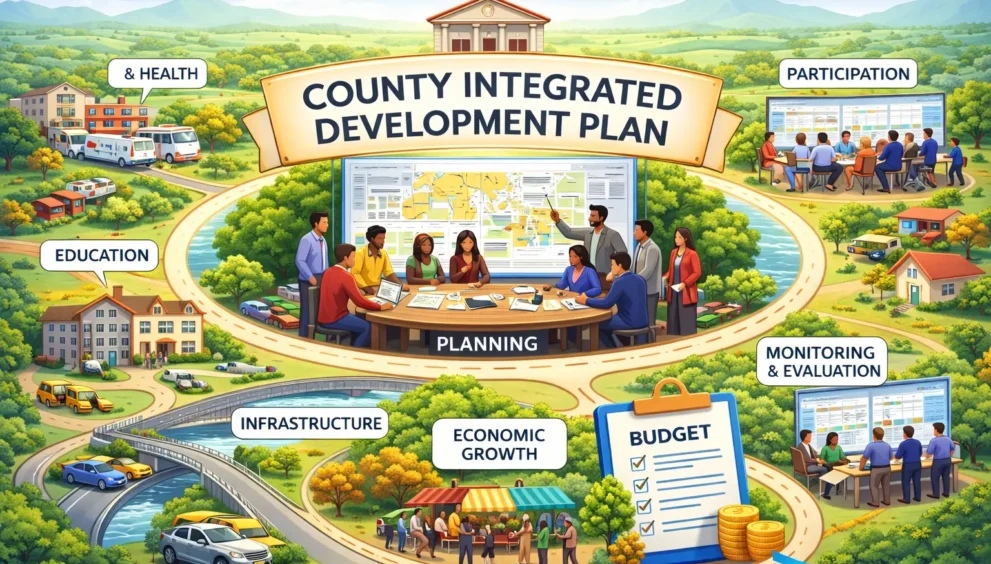
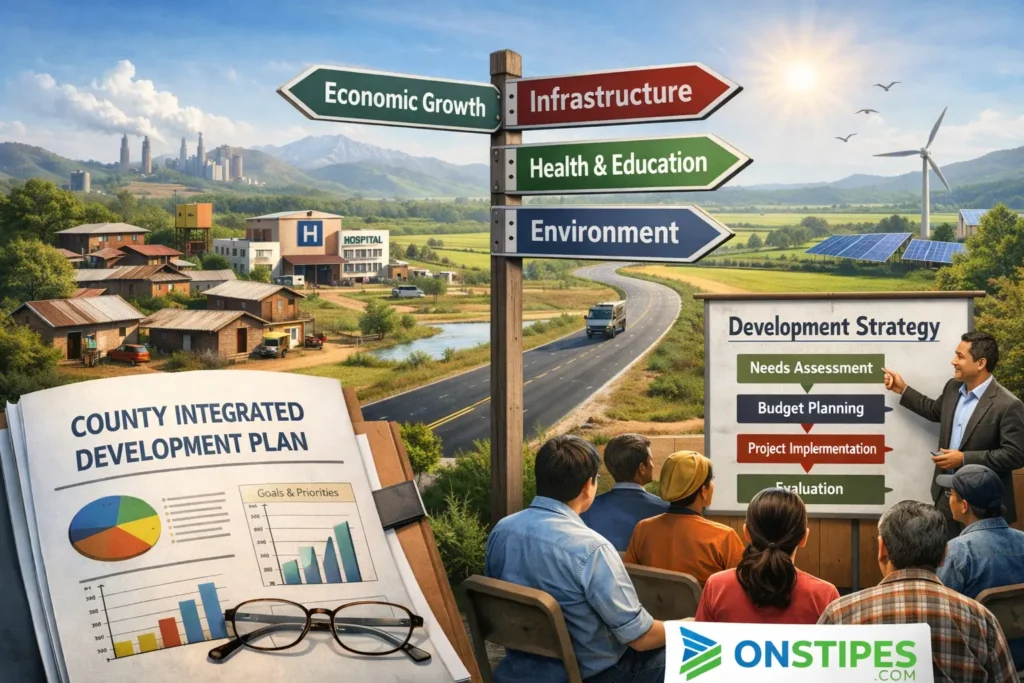
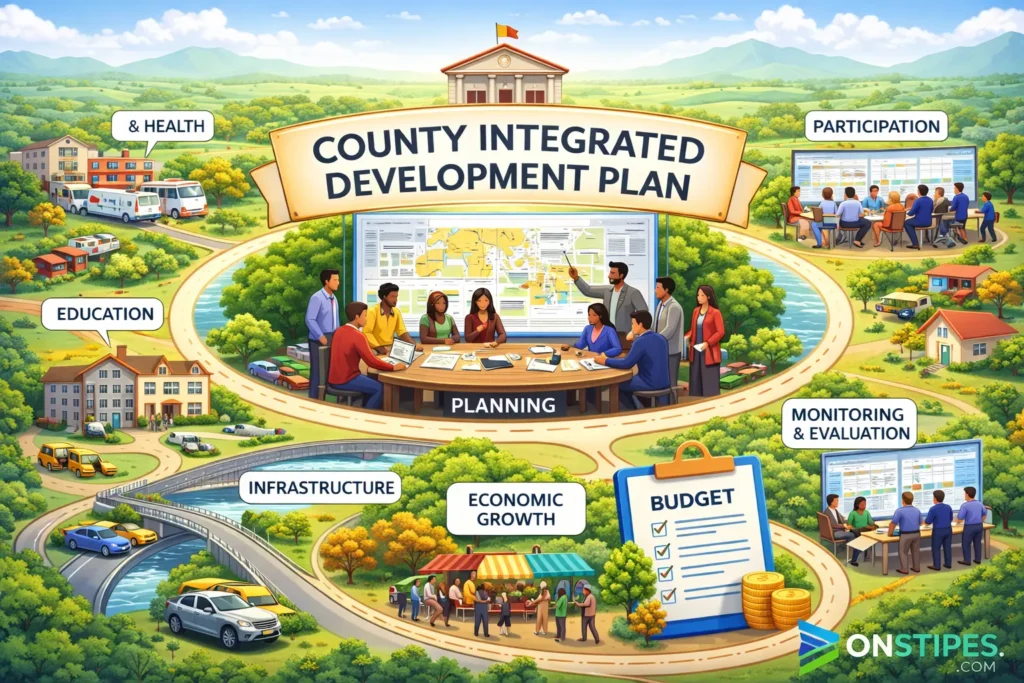
A county integrated development plan is a strategic document that guides how a county plans its growth, manages resources, and delivers services to its residents over a fixed period, usually five years. It serves as a roadmap that connects development goals with real community needs.
This plan helps county governments move away from uncoordinated projects by providing a structured approach to decision-making. Through clear priorities, counties can focus on sustainable economic growth, social development, and infrastructure improvement.
Public participation plays a central role in shaping the plan. Citizens, stakeholders, and institutions contribute ideas that ensure development projects reflect local challenges and expectations rather than top-down assumptions.
Overall, the county integrated development plan strengthens transparency, accountability, and effective use of public funds, making it a critical tool for long-term county development.
Understanding Long-Term Development Planning at the County Level
Long-term development planning at the county level focuses on setting clear goals that guide growth over several years rather than relying on short-term or reactive decisions. This approach helps counties anticipate future needs such as population growth, infrastructure demand, and economic expansion.
By planning ahead, county governments can prioritize projects that deliver lasting value to communities. Roads, healthcare facilities, education systems, and environmental programs are designed with sustainability in mind, ensuring resources are not wasted on uncoordinated initiatives.
This type of planning also improves coordination across departments. When all sectors follow a shared vision, service delivery becomes more efficient, and overlapping or conflicting projects are reduced.
Overall, long-term county planning creates stability, supports inclusive development, and provides a structured foundation for consistent progress over time.
Why Strategic Planning Is Essential for Sustainable Local Growth
Strategic planning helps counties identify long-term development priorities that balance economic growth, social needs, and environmental protection. Instead of reacting to immediate pressures, counties use structured plans to guide steady and inclusive progress.
A well-defined strategy ensures limited public resources are allocated to projects with the greatest long-term impact. This reduces wasteful spending and supports essential sectors such as healthcare, education, transport, and housing.
Strategic planning also strengthens resilience. Counties that plan ahead are better prepared to handle population changes, climate risks, and economic shifts without disrupting service delivery.
Overall, strategic planning creates a clear direction for development, helping counties grow in a way that is sustainable, accountable, and aligned with community expectations.
Legal and Policy Frameworks Guiding County Development
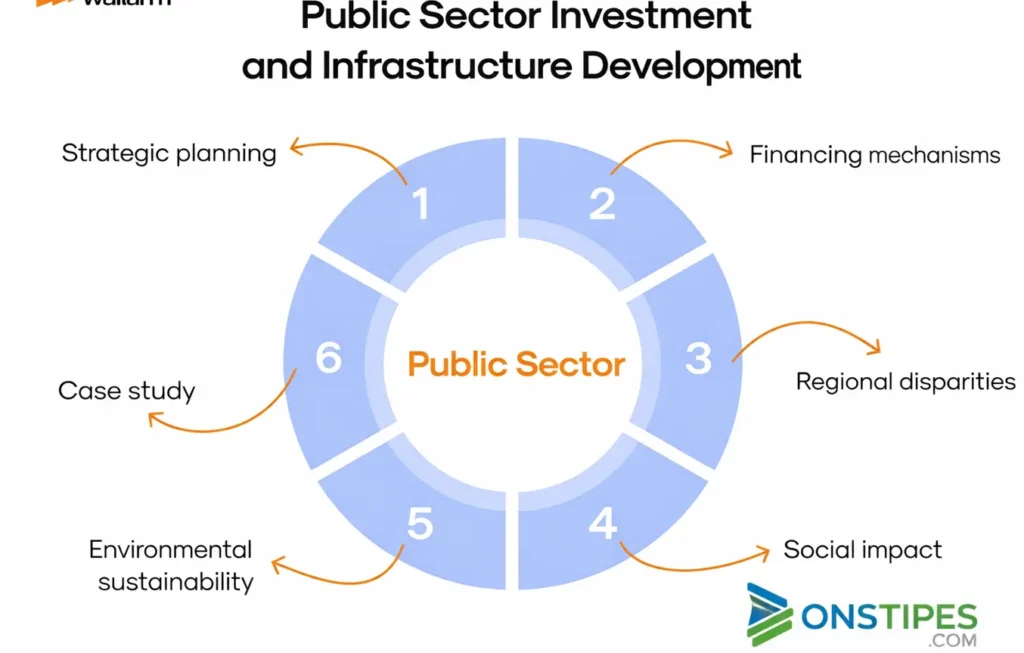
County development planning is shaped by national laws and policy frameworks that define how plans are prepared, approved, and implemented. These frameworks ensure development activities follow clear rules and align with broader government objectives.
Legal guidelines help standardize planning processes across counties, promoting fairness, accountability, and transparency. They also outline roles for county officials, assemblies, and oversight institutions involved in development planning.
Policy frameworks further guide counties by setting national priorities such as economic growth, social equity, and environmental sustainability. County plans are expected to align with these priorities while addressing local needs.
Together, legal and policy frameworks provide structure and legitimacy to county development efforts, ensuring plans are consistent, lawful, and focused on long-term public benefit.
County Integrated Development Plan and Its Role in Public Resource Allocation
The county integrated development plan plays a central role in deciding how public funds are allocated across different sectors. It ensures that spending decisions are guided by clearly defined development priorities rather than short-term or politically driven interests.
By linking development goals with budgeting processes, the plan helps counties distribute resources more fairly and efficiently. Priority projects identified in the plan are reflected in annual budgets, making financial planning more transparent and predictable.
The plan also supports accountability by providing a reference point for evaluating whether public funds are used as intended. Citizens and oversight bodies can track spending against approved development objectives.
Overall, the county integrated development plan strengthens financial discipline and ensures that limited public resources are invested in projects that deliver long-term value to communities.
Key Stakeholders Involved in County Planning Processes
County planning is a collaborative process that involves multiple stakeholders working together to shape development priorities. County officials and technical departments play a leading role by providing data, drafting plans, and coordinating sector activities.
Elected representatives and county assemblies are also key participants. They review, debate, and approve development plans to ensure they align with public interests and legal requirements.
Community members, civil society groups, and the private sector contribute valuable local knowledge. Their input helps identify real challenges, investment opportunities, and practical solutions that may otherwise be overlooked.
Together, these stakeholders ensure county planning is inclusive, balanced, and responsive to both policy goals and community needs.
How Public Participation Shapes Development Priorities
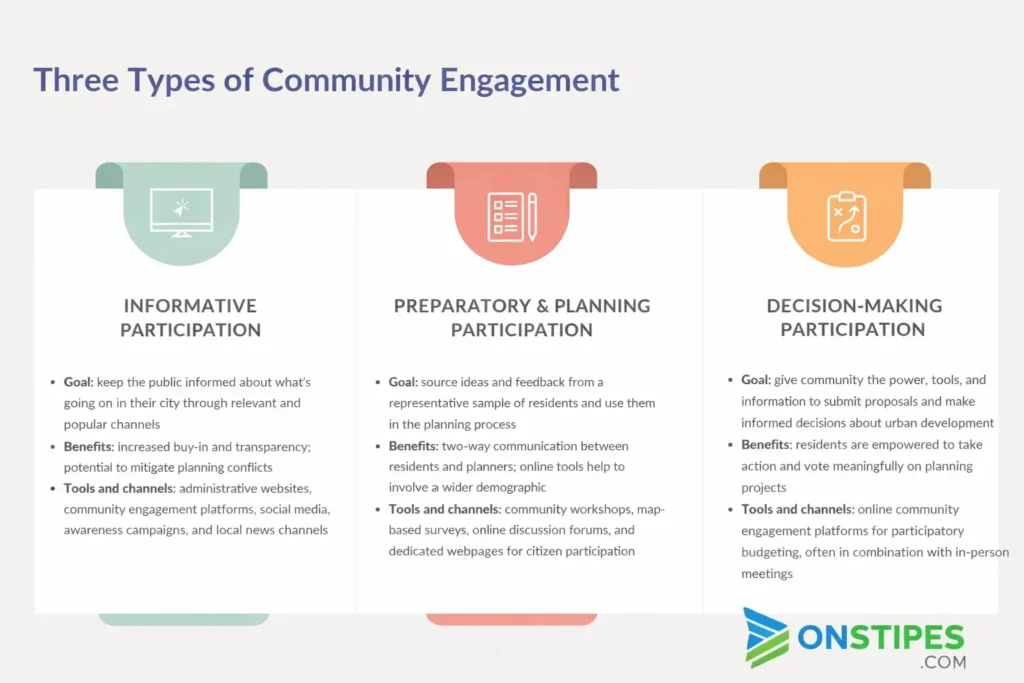
Public participation allows residents to directly influence county development decisions by sharing their needs, concerns, and ideas. Through forums, consultations, and written submissions, communities help identify priority projects that reflect real local challenges.
This involvement improves transparency and trust between county governments and citizens. When people see their input reflected in development plans, they are more likely to support and engage with implemented projects.
Public participation also helps counties avoid misaligned investments. Local feedback highlights urgent issues such as access to water, healthcare, roads, or education that technical data alone may not fully capture.
Overall, meaningful public engagement ensures development priorities are inclusive, practical, and aligned with community expectations.
Linking Development Plans with Annual Budgets
Linking development plans with annual budgets ensures that county priorities are translated into actionable and funded projects. Approved development objectives guide how financial resources are distributed each year, reducing unplanned or inefficient spending.
This connection improves financial discipline by aligning long-term goals with short-term budget cycles. Projects identified in development plans are phased into annual budgets based on urgency, cost, and expected impact.
Budget alignment also strengthens accountability. County officials and oversight bodies can track whether allocated funds are supporting approved development priorities and timelines.
Overall, integrating development plans with budgeting creates consistency, transparency, and better outcomes in service delivery.
Sector-Based Planning for Social and Economic Progress
Sector-based planning allows counties to break down development goals into specific areas such as health, education, infrastructure, agriculture, and economic development. Each sector develops targeted strategies that contribute to overall county growth.
This approach helps counties prioritize investments where they are needed most. For example, improving healthcare facilities enhances social well-being, while investing in roads and markets supports economic activity and job creation.
Sector planning also improves coordination among departments. When sectors align their objectives, projects are implemented more efficiently, reducing duplication and resource wastage.
Overall, sector-based planning ensures balanced development that supports both social welfare and long-term economic progress.
Monitoring, Evaluation, and Performance Tracking Methods
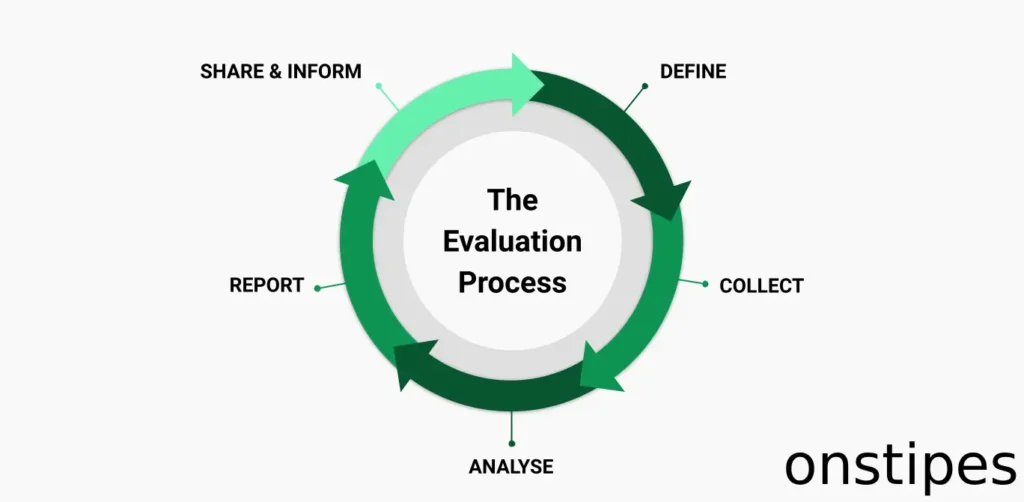
Monitoring and evaluation help counties measure progress and ensure development projects achieve their intended outcomes. Regular tracking allows county governments to identify delays, challenges, and areas that require adjustment.
Performance indicators are used to assess whether projects are meeting set targets within planned timelines and budgets. These indicators provide evidence for decision-making and improve overall project management.
Evaluation findings also support accountability by showing how public resources are used. Reports are shared with oversight bodies and the public to promote transparency and trust.
Overall, strong monitoring and evaluation systems help counties improve efficiency, learn from experience, and deliver better development results.
Common Challenges Counties Face During Plan Implementation
Counties often face challenges when turning development plans into real projects. Limited financial resources can delay or scale down planned initiatives, especially when funding does not match projected costs.
Capacity gaps within county institutions may also affect implementation. Shortages of skilled personnel, weak coordination, or slow procurement processes can reduce efficiency and impact.
Political changes and shifting priorities sometimes disrupt continuity. New leadership may alter focus areas, causing delays or abandonment of previously approved projects.
Despite these challenges, strong planning, stakeholder collaboration, and consistent monitoring can help counties overcome obstacles and successfully implement development plans.
Conclusion
A county integrated development plan provides a clear and structured approach to long-term county growth. By defining priorities and aligning them with available resources, counties can move beyond short-term decision-making and focus on sustainable development.
Through inclusive planning, strong legal frameworks, and public participation, counties are better positioned to address real community needs. This ensures that development projects are not only well-planned but also widely supported by residents and stakeholders.
Effective implementation depends on proper budgeting, sector coordination, and continuous monitoring. When these elements work together, counties can improve service delivery and achieve measurable development outcomes.
Overall, a well-prepared and well-executed development plan strengthens governance, accountability, and long-term prosperity at the county level.